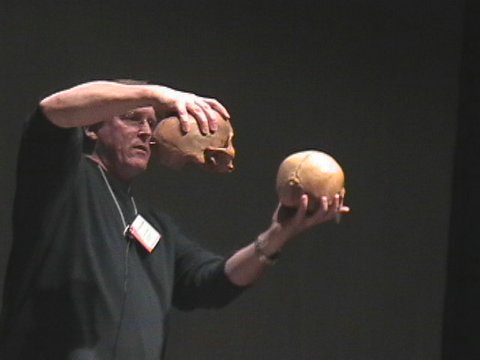
Dr. Bruce Latimer has a Shakespearean moment at a Forensic Science workshop.



She knew she would face another day of confusion, another day of pretending to follow along. She could hardly do long division, let alone solve for x.So, the REAL problem is that she is innumerate, not Algebra-phobic.
Shane Sauby, who worked as an attorney and stockbroker before becoming a teacher, volunteered to teach the students confronting first-year algebra for a second, third or fourth time. He thought he could reach them.Nah, I'm sure THAT wasn't the problem. It must have been the mysterious Algebra block.
But, Sauby said, many of his students ignored homework, rarely studied for tests and often skipped class.
George Seidel, devoted a class this fall to reviewing equations with a single variable, such as x -- 1 = 36. It's the type of lesson students were supposed to have mastered in fourth grade.Look, guys, it isn't rocket science. If you don't put the effort in, you won't take the reward out.
Only seven of 39 students brought their textbooks. Several had no paper or pencils. One sat for the entire period with his backpack on his shoulders, tapping his desk with a finger.
Another doodled an eagle in red ink in his notebook. Others gossiped as Seidel, a second-year teacher, jotted problems on the front board.
Seidel did not appear to make a difference with Gabriela Ocampo. She failed his class in the fall of 2004 — her sixth and final semester of Fs in algebra.Ya' think that might have made a difference?
But Gabriela didn't give Seidel much of a chance; she skipped 62 of 93 days that semester.
I confess to be one of those people who hate math. I can do my basic arithmetic all right (although not percentages) but I flunked algebra (once), barely passed it the second time -- the only proof I've ever seen of divine intervention -- somehow passed geometry and resolved, with a grateful exhale of breath, that I would never go near math again. I let others go on to intermediate algebra and trigonometry while I busied myself learning how to type. In due course, this came to be the way I made my living. Typing: Best class I ever took.Wrong-o, Cohen.
Here's the thing, Gabriela: You will never need to know algebra. I have never once used it and never once even rued that I could not use it. You will never need to know -- never mind want to know -- how many boys it will take to mow a lawn if one of them quits halfway and two more show up later -- or something like that. Most of math can now be done by a computer or a calculator. On the other hand, no computer can write a column or even a thank-you note -- or reason even a little bit. If, say, the school asked you for another year of English or, God forbid, history, so that you actually had to know something about your world, I would be on its side. But algebra? Please.
Gabriela, sooner or later someone's going to tell you that algebra teaches reasoning. This is a lie propagated by, among others, algebra teachers. Writing is the highest form of reasoning. This is a fact. Algebra is not.
Gabriela Ocampo.Well, I have a few questions.
Last year, she dropped out of the 12th grade at Birmingham High School in Los Angeles after failing algebra six times in six semesters, trying it a seventh time and finally just despairing over ever getting it. So, according to the Los Angeles Times, she "gathered her textbooks, dropped them at the campus book room and, without telling a soul, vanished from Birmingham High School."
Let me just add my $.02. It should be a criminal offense for a journalist to address this issue (on any school subject) and fail to ask: "Were her teachers any good? Did they offer any tutoring? When she failed once, did they try something different the second time? And how many other students are this frustrated as well? How many of them all have the same teacher?" To add to this lack of any sort of journalistic investigation the insistence that the problem is the math, because it's just a bad old hard subject that adults almost never use in real life, is idiotic as well.
In the nineteen-eighties, when homelessness first surfaced as a national issue, the assumption was that the problem fit a normal distribution: that the vast majority of the homeless were in the same state of semi-permanent distress. It was an assumption that bred despair: if there were so many homeless, with so many problems, what could be done to help them? Then, fifteen years ago, a young Boston College graduate student named Dennis Culhane lived in a shelter in Philadelphia for seven weeks as part of the research for his dissertation. A few months later he went back, and was surprised to discover that he couldn’t find any of the people he had recently spent so much time with. “It made me realize that most of these people were getting on with their own lives,” he said.It turned out that, by targeting the hard-core few, social services could be delivered cheaper, and, more importantly, better.
Culhane then put together a database—the first of its kind—to track who was coming in and out of the shelter system. What he discovered profoundly changed the way homelessness is understood. Homelessness doesn’t have a normal distribution, it turned out. It has a power-law distribution. “We found that eighty per cent of the homeless were in and out really quickly,” he said. “In Philadelphia, the most common length of time that someone is homeless is one day. And the second most common length is two days. And they never come back. Anyone who ever has to stay in a shelter involuntarily knows that all you think about is how to make sure you never come back.”
The next ten per cent were what Culhane calls episodic users. They would come for three weeks at a time, and return periodically, particularly in the winter. They were quite young, and they were often heavy drug users. It was the last ten per cent—the group at the farthest edge of the curve—that interested Culhane the most. They were the chronically homeless, who lived in the shelters, sometimes for years at a time. They were older. Many were mentally ill or physically disabled, and when we think about homelessness as a social problem—the people sleeping on the sidewalk, aggressively panhandling, lying drunk in doorways, huddled on subway grates and under bridges—it’s this group that we have in mind. In the early nineteen-nineties, Culhane’s database suggested that New York City had a quarter of a million people who were homeless at some point in the previous half decade —which was a surprisingly high number. But only about twenty-five hundred were chronically homeless.
It turns out, furthermore, that this group costs the health-care and social-services systems far more than anyone had ever anticipated. Culhane estimates that in New York at least sixty-two million dollars was being spent annually to shelter just those twenty-five hundred hard-core homeless.
I view education as a self-commitment to being a more productive kind of person. Education is about self-acculturation.It's an interesting idea - that education might be more important than we realize. It's not "just the facts" that matter, but the opportunity to mold CHARACTER.
Men are born beasts. But education gives you a peer group, a self-image, and some skills as well. Getting an education is like becoming a Marine. Men need to be made into Marines. By choosing many years of education, you are telling yourself that you stand on one side of the social divide. The education itself drums that truth into you.
Similarly, if you become a Mormon or a Protestant in Central America, your life prospects go up. It is not that Mormons have learned so much more, but rather they have a different sense of self. They have a positive self-image about their destiny in life and choose a different set of peers. They also choose not to drink.

I realized that I needed to model notetaking for them, possibly by showing them several examples of notes on the same passage, and having them discuss which ones would be most useful for studying at a later point.She goes on to detail just how she manages the process of helping her students to "de-code" the text.
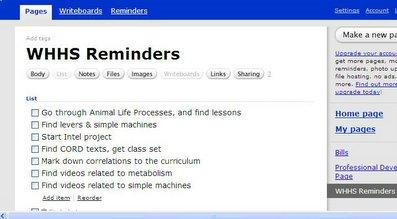
As I began thinking about today's lesson - another reading-oriented lesson, this time about machines & mechanical advantage - I realized that there are several aspects to successful content-area literacy. The goal is that the students will be able to learn new material from a text with little support from the teacher. The first thing they need to be able to do is figure out what's important in the text. Then they need to be able to reflect on it and play with it in their heads until they are sure they understand it. Finally, they need to write down the most important points and whatever supporting details they need in order to remember and review it later on.


Bilingual education involves the difficult achievement of learning nothing in two languages.

Much has been written about the inequity of the availability of computers and communications tools between different schools. However, the digital divide between teachers exists even in technology rich schools. As Will points out, there are many teachers who have no idea of the power and potential already sitting in their own classrooms.
So, is it possible to help these teachers move faster in their understanding of how to best use what they have - maybe before the next wave of innovation hits? I agree with Will that it’s going to be difficult to impossible as the gap continually widens.
Anandh Swaminathan, a junior at Acton-Boxborough Regional High School, was surprised to hear that half of his peers in the Commonwealth answered the question incorrectly. He didn't remember it as particularly difficult.
''It's a typical Algebra I problem," said Swaminathan, 15. ''It seems more straightforward. I actually thought that some of the other ones were harder."
Math teachers said the baseball question was a fair one, although puzzling to those unfamiliar with the sport.
''I certainly think our kids who are not speaking English as their primary language may not know the word grandstand or the word bleacher," said Debby Feldman, head of the math department at Brockton High School.
''When kids are reading a math problem and come up against words that are specific to a specific area and they don't know what they are, a lot of times it just freaks them out."
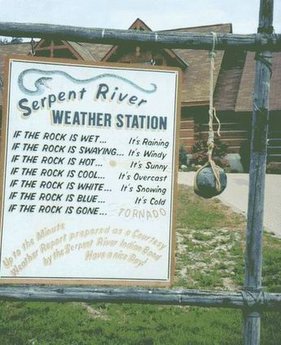
there are three kinds of people in the world: those who can count and those who can’t.
What if I had half the mass and volume of the rice?

Take an example from my field: education. People complain that teachers are leaving the field. Polticians and teachers say that the solution is to increase teacher salaries. Well, I'm all for that. But what if that isn't the real cause of teachers retiring from the profession? What if it aggravation with administrators, nasty children, work overload, poor discipline procedures, nonsupportive parents, or any of a host of factors that could lead to loss of job satisfaction? If you increase the salaries and don't address the other problems, you haven't solved the problem. And you've taken money from a whole host of other areas to do so. How are journalists to find out what the real problem is? That's tough. I don't know. I've talked to many teachers who have decided to do something else and the reasons are many and varied. Sometimes the money was an issue, but often it wasn't. Teachers know what the salary is going in. It's the other stuff that can surprise them.